I remember when the In the Turquoise Moonglow fan creation event first rippled through the Wuthering Waves community like a stone thrown into a tide pool. I was one of those shy sketchbook sailors who usually kept my art clamped shut, but that event became a lighthouse. Even though the submission window ran from August 15 to September 15, 2024 (PT), I still look back at it as a masterclass in how a gacha game can turn casual creativity into a full-blown celebration.
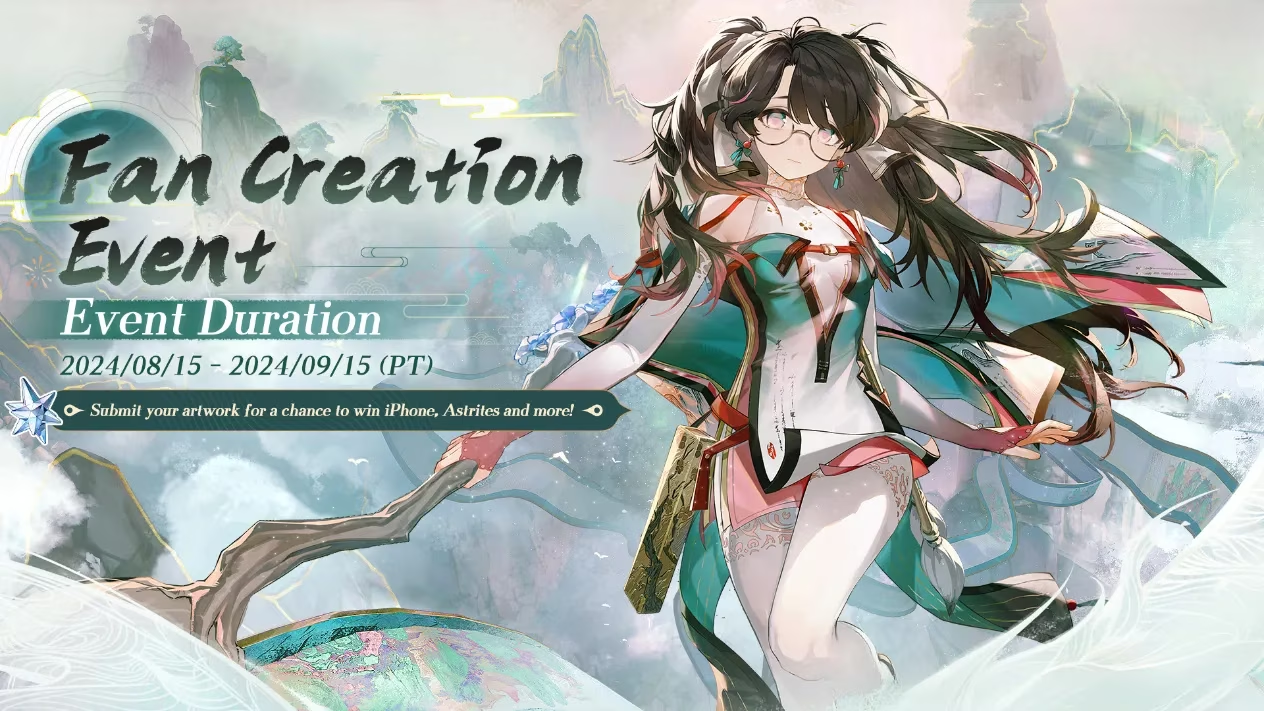
The brief was refreshingly open. You could submit an illustration of your favorite Resonator, a comical scene from your open-world adventures, or a video showing off some ridiculous combat combo you had finally mastered. Anything that fit Version 1.2 and the In the Turquoise Moonglow theme was fair game. That openness was the real magnet. It felt less like a narrow art exam and more like being handed a blank tide chart and told to find your own current.
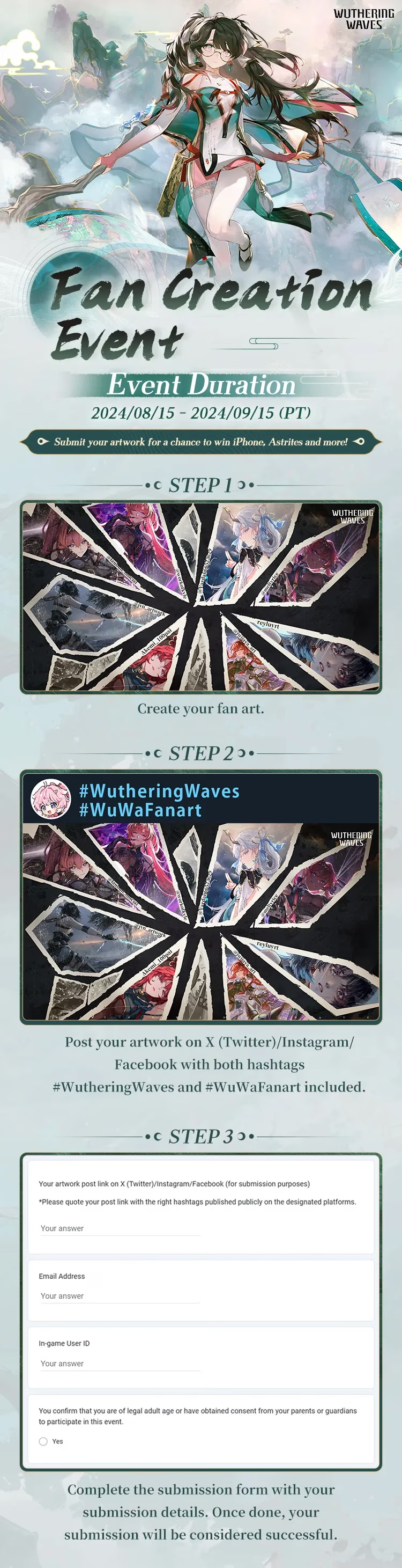
To enter, you needed to post publicly on X (Twitter), Instagram, or Facebook with both #WutheringWaves and #WuWaFanart. Then you had to fill out the official submission form and include the public link to your post. If either piece was missing, you were basically sailing without a map.
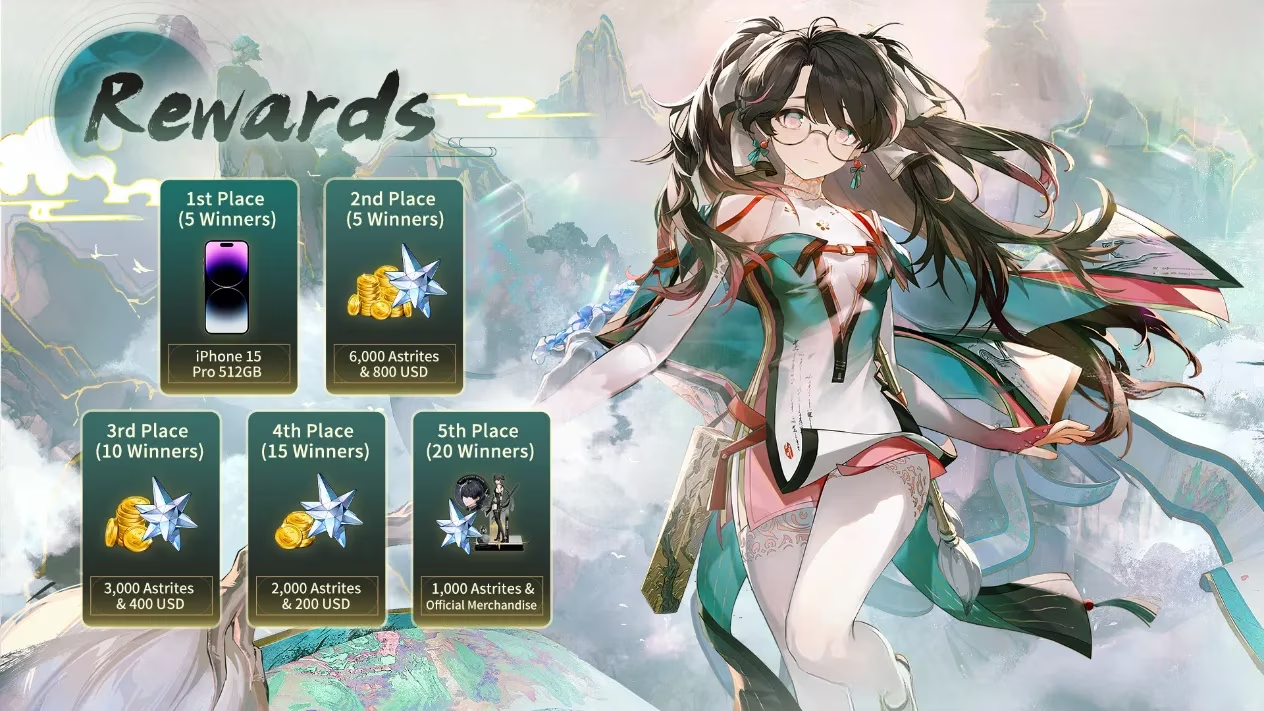
Then came the prize pool, which honestly felt like a constellation dangling just above the tide. Let me break it down:
| Prize tier | Number of winners | Reward |
|---|---|---|
| 1st place | 5 | iPhone 15 Pro 512GB |
| 2nd place | 5 | 6,000 Astrites and 800 USD |
| 3rd place | 10 | 3,000 Astrites and 400 USD |
| 4th place | 15 | 2,000 Astrites and 200 USD |
| 5th place | 20 | 1,000 Astrites and official merchandise |
The judging criteria were not a secret formula, but the announcement did say eligible works would be evaluated on adherence to the theme, degree of completion, reception among players, and other relevant factors. Translation: polish mattered, but so did whether the community actually vibed with your piece. That last part was a pressure cooker of inspiration for me. A technically clean image could lose to a scrappier piece that captured the exact mood of a moonlit shoreline, because players felt something when they saw it.
One rule I appreciated: you could submit multiple entries and potentially win multiple rewards. That was rare. It meant you did not have to bet your whole month on one perfect illustration. You could spread your ideas like seeds across a few different pieces. However, the same work posted on different platforms would not stack as multiple entries. So cross-posting was fine for visibility, but it only counted once.
Of course, there were guardrails. The event excluded works not created in accordance with Wuthering Waves, plagiarized or infringing works, late submissions, AI-assisted creations, extremely aggressive content, commercial work, previous contest entries, and anything judges deemed inappropriate. The AI exclusion especially stood out to me. In 2026, when AI-generated art is everywhere, that rule reads like a breath of fresh sea air. It protected the human hands behind the entries and kept the contest from becoming a prompt-engineering race.
There were also practical notes. Deleted posts would lose reward eligibility, which is why I backed up every post I made. If official staff reached out and you did not reply within 7 days, you were considered to have waived the reward. And all languages were welcome, though entries differing only in language were treated as equivalent works. That last detail was quietly important for a global community, because it meant translation tweaks were not a loophole for double-dipping.
Looking back from 2026, I have a few takeaways. First, always read the notes section before you spend ten hours on a piece. Second, do not sleep on the less flashy rules like reply deadlines and deleted-post clauses, because they can quietly sink an otherwise winning entry. Third, if a future fan event looks anything like this one, treat the theme as a starting point rather than a cage. The best entries were the ones that felt like they had been pulled straight from someone's actual journey through Solaris-3, not just polished to look expensive.
The In the Turquoise Moonglow event was not just a contest. It was a temporary guild hall for the creative side of the community, a place where people who normally only shared damage screenshots suddenly showed off brushwork, editing tricks, and combat choreography. I did not walk away with an iPhone, but I did walk away with a clearer sense of why fan creation events matter. They turn players from consumers into co-authors of the world they love, and that is a kind of reward no gacha pull can match.