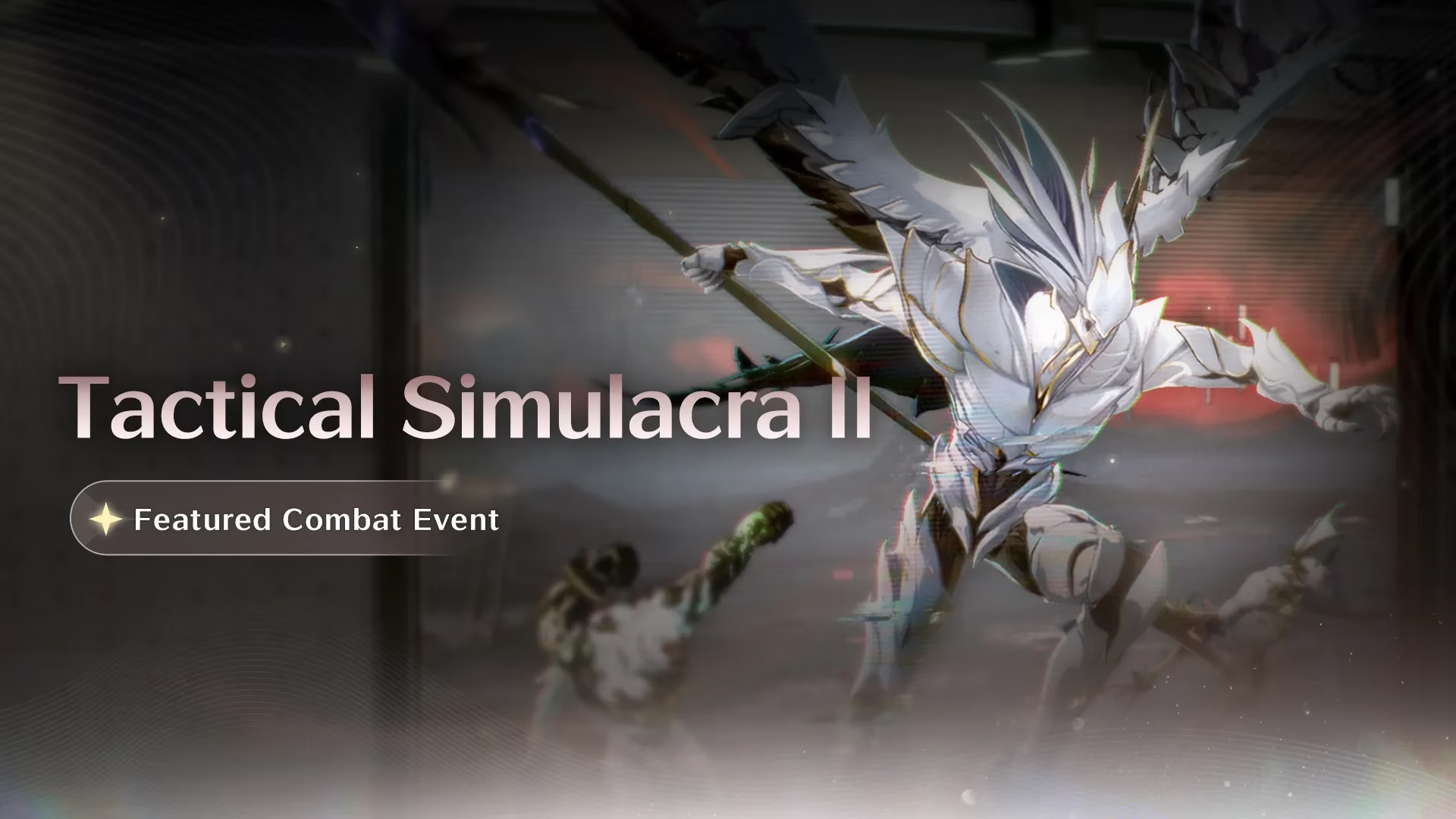
I’ll be honest: when I first read the Academy’s pitch for Tactical Simulacra II, I thought it sounded like a fancy way to say 'fight a lot of bosses and hope your reflexes behave.' The premise was simple but weirdly compelling: the Academy was experimenting with a new type of technology rumored to simulate powerful enemies for troop combat training. In practice, that meant I stepped into simulation domains, stacked special buffs, and tried not to get flattened by waves of very unhappy enemies. Since it is 2026 now, I should say this upfront: Tactical Simulacra II was a limited-time event that ran from 2024-12-19 10:00 to 2025-01-01 03:59 server time, so it is long over. Still, as a retrospective, it is a neat little case study in how to make combat training feel like a puzzle instead of a spreadsheet.
What I actually had to do ⚔️
Eligibility was straightforward: reach Union Level 14. That is low enough that most active players could peek in without a massive grind, which I appreciated. The event had seven stages total. Each stage unlocked once I reached 1,000 points in the previous stage, so there was a clear ladder to climb. I liked that structure because it gave me a reason to replay a stage instead of just barging into the next one and getting humbled.
The core loop was waves of powerful enemies, special buffs, and different simulation domains. As difficulty rose, I faced consecutive battles with more enemy bosses, but the game also handed me more buffs. That trade-off is the heart of the mode for me. It is not just 'enemies hit harder now.' It is 'enemies hit harder, and you get more toys, so use them properly.'
Score, not just survival 🎯
Each challenge’s final score was calculated from Monster Points, Time Points, and Technical Points. That trio matters. If I only focused on killing things, I left value on the table. If I played too safely, Time Points suffered. And if I ignored the technical side, my score looked flat even when I cleared the wave.
The Combat Rank system was the part that really shaped my behavior. Hitting the enemy steadily improved my Combat Rank. Successful Dodges, Dodge Counters, and Counterattacks gave a greater boost. Getting hit significantly lowered it. So the mode quietly told me: stop trading blows like a training dummy. Keep pressure on, but stay clean. I found myself paying more attention to enemy tells than I usually do in a routine farm session. A sloppy hit was not just damage; it was score erosion.
Here’s a quick reference table I would have wanted at the start:
| System | What it rewards | My takeaway |
|---|---|---|
| Monster Points | Defeating enemies | Clear the wave, but do not ignore the rest |
| Time Points | Speed | Fast clears matter, but reckless speed can backfire |
| Technical Points | Dodges, Dodge Counters, Counterattacks | Clean play is score play |
| Combat Rank | Steady hits plus evasive and counter play | Do not get hit; build momentum |
If this event ever came back in a similar form, my advice would be simple: treat each stage as a scoring run, not a survival test. Pick buffs that support your clean-play plan, not just the biggest number. If you are confident in dodge counters, lean into technical scoring. If your damage windows are short, prioritize buffs that help you burst bosses during safe openings. And replay the early stages until 1,000 points feels comfortable, because the next stage assumes you learned something. I certainly needed that reminder. The seven-stage structure also made the whole thing feel like a training montage, except the montage could punch back.
Rewards and the 2026 reality check
The reward list was generous for a two-week event: Astrite x600, Malleable Elite Class Echo I x1, Malleable Elite Class Echo II x1, Premium Enclosure Tank x12, Premium Tuner x100, Shell Credit x860,000, and other materials. Reaching the required score in each stage earned the corresponding rewards, so progress felt incremental rather than all-or-nothing.
If you are reading this in 2026 and wondering whether you can jump in: no, the event window has closed. I cannot pretend otherwise. But I still think Tactical Simulacra II is worth remembering because it shows how to turn combat into a scoring conversation. It asked me to manage buffs, route through boss waves, and protect my Combat Rank. That is a lot more interesting than a plain damage check, and it is why I still bring it up when I talk about event design.