As I wander the vast, windswept plains of Solaris-3, the echoes of the Lament still whispering in the air, I find myself reflecting not just on the journey ahead, but on the path we have already walked. It is 2026, and the world of Wuthering Waves has grown and shifted like the dunes under a gale. The global launch, that initial surge of energy and discovery, feels like a distant memory—a prologue to the living, breathing world we inhabit today. I remember the fervor, the collective intake of breath as we first stepped into this shattered yet beautiful landscape. But what is a world without the voices of its explorers? The feedback we provided, a chorus of hopes and critiques, became the very catalyst for the evolution we now experience. Have you ever paused to consider how our shared journey shaped the horizon?

The first symphony of change began with the most fundamental of desires: the freedom to move at our own rhythm. I recall the early days, where the weight of the narrative, though rich, sometimes felt like an anchor. The main quest's epic scope was undeniable, but wasn't there a longing to sometimes just… skip? To dash forward towards a combat encounter glowing on the horizon? The developers listened. They redesigned the very interface of impatience, transforming that small, unreadable button into a clear gateway. Now, vast swathes of the prologue and Chapter 1 yield to our will. We can breeze through dialogues outside of grand cinematics, making the story feel less like a mandatory lecture and more like a book whose pages we can turn at our leisure. This was more than a quality-of-life fix; it was a gift of time, allowing us to savor the moments we choose and accelerate through those we wish to recall later.
But what is freedom of movement without the poetry of motion? Combat is the heart's rhythm in Wuthering Waves, the dance between Resonator and Echo. Yet, in the beginning, the dance sometimes felt muted. The significance of a perfectly timed dodge, the visceral satisfaction of a counterattack—did they not sometimes lack the visual crescendo they deserved? The feedback spoke of impacts feeling soft, of environmental objects clumsily obscuring the ballet. And for those of us who yearned for the tactile connection of a controller, the experience was, admittedly, a discordant note.
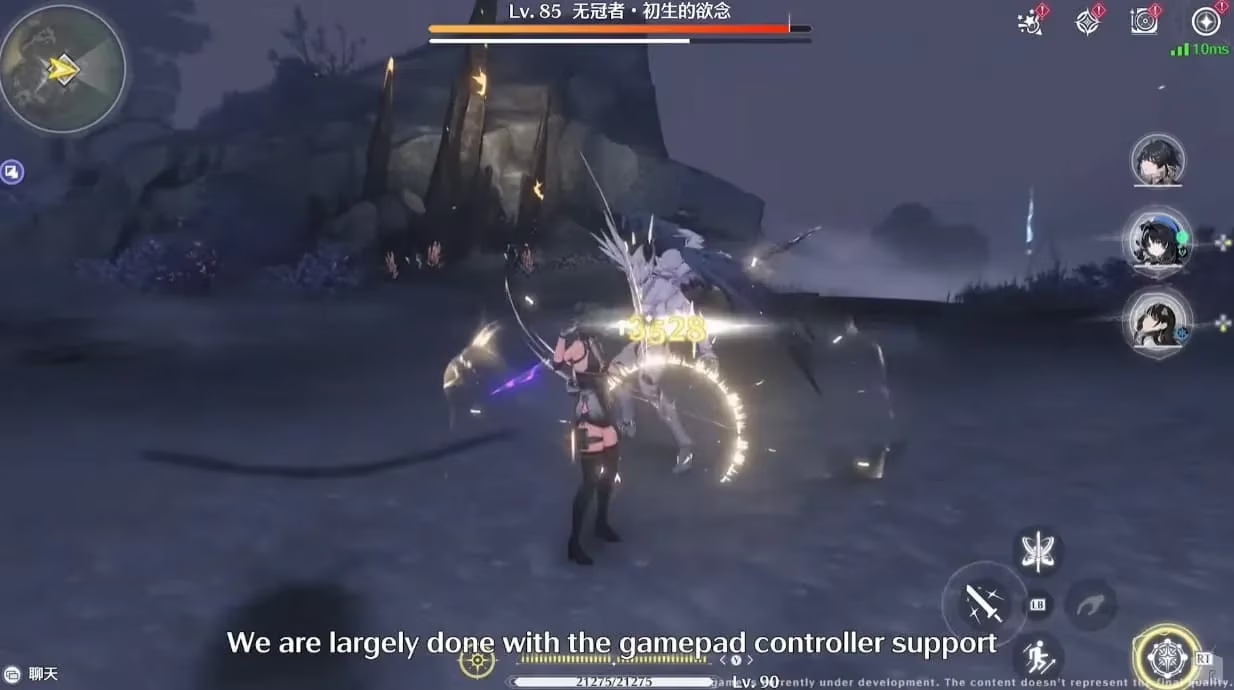
The response was a masterclass in refinement. They dedicated themselves to optimizing each combat scene, fine-tuning the feedback until every parry sang and every strike landed with palpable weight. The controller support, once a tentative feature, blossomed. Customization options arrived swiftly, allowing us to map our actions to the buttons that felt most natural, transforming combat from a sequence of inputs into an extension of instinct. The environment learned its place, no longer a clumsy spectator but a dynamic part of the stage. Can you feel the difference now, as you flow from one enemy to the next, the world reacting to your every move with clarity and force?
Then came the gesture that truly defined their commitment: the Voucher of Reciprocal Tides. I will never forget the community's murmurings about the Beginner’s Choice Convene—a sense of potential unfulfilled. In 2024, Kuro Games did not merely adjust rates or tweak percentages. They offered a gift, an apology woven into opportunity. That voucher, arriving like an unexpected tide, allowed every player to choose their companion, to select a 5-Star Standard Resonator that resonated with their soul. This event, open for a full year until May 2025, was a promise. It said, "Your journey is yours to shape." It acknowledged missteps not with silence, but with generosity. That spirit of reciprocity continues to echo in every update.
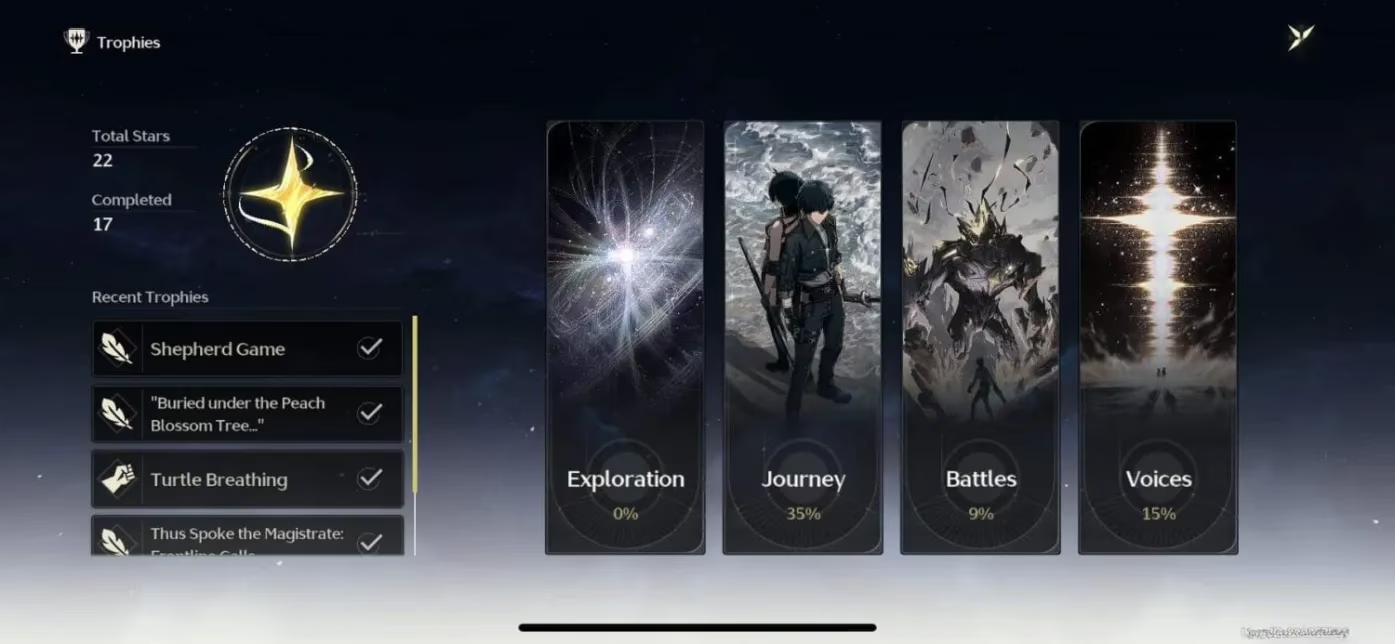
The improvements did not stop at the major chords. They flowed into the details that make a world live and breathe:
-
The Faces of the World: NPCs received renewed artistry, their expressions and attire gaining depth, making every interaction in Jinzhou or the wilderness feel more meaningful.
-
A Cartographer's Dream: The introduction of a layered map function was a revelation. No longer are we frustrated by a flat, confusing overlay. We can now peel back the strata of the world, understanding its verticality, its hidden caves and soaring peaks with intuitive clarity.
-
The Echoes Evolve: The system of Echoes, the core of our power, expanded. New transformations became available, offering fresh strategies and playstyles, ensuring that our connection to the world's remnants never grows stale.
Looking back from 2026, these were not just patches or updates; they were the foundational layers upon which the current, thriving Wuthering Waves is built. The game we play today—with its deeper narratives, its even more refined combat, its bustling world filled with secrets—stands on the willingness of its creators to listen and evolve. They outlined a future based on our key concerns and then built it, piece by piece. The basic experience was not just improved; it was transformed into a stable, responsive, and deeply engaging platform for adventure.
So, as I stand here, two years on, with new horizons ever unfolding, I feel a profound connection to this world. It is a world that listened, a world that changed with us. The future updates, now a regular and anticipated rhythm of life in Solaris-3, continue this dialogue. What began with fixes to skip functions and controller support has blossomed into an ongoing partnership between wanderer and world. Our echoes, it seems, were heard, and they returned to us as waves of meaningful change. Isn't that the most resonant victory of all?